
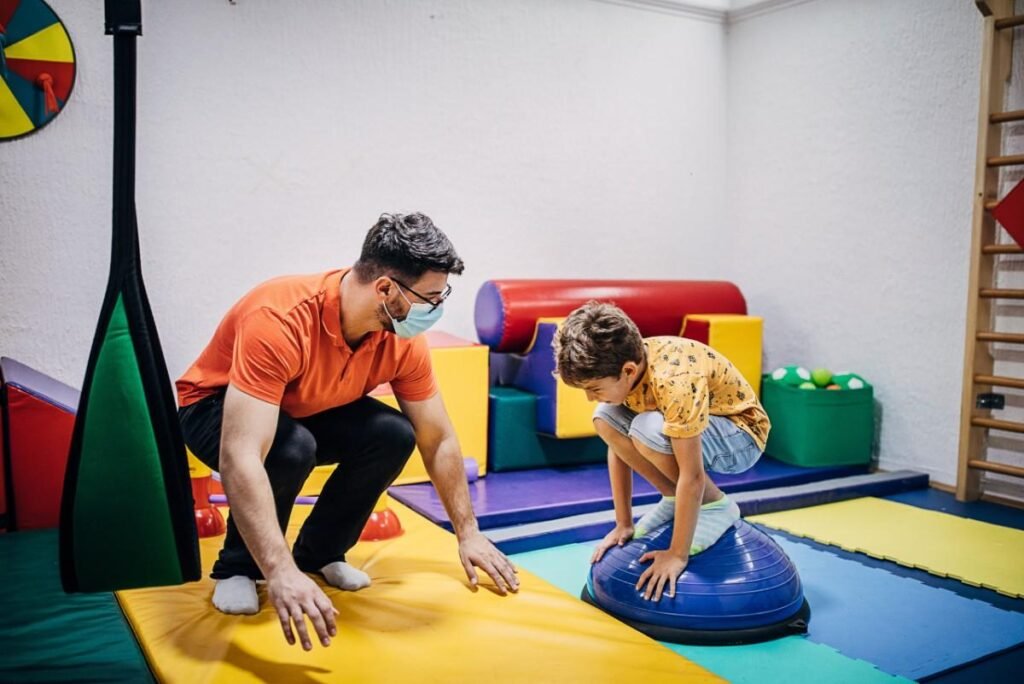
Sensory Integration Therapy helps children process and respond to sensory input more comfortably.
It supports those who struggle with textures, sounds, movements, or touch sensitivity.
Through structured play and sensory-based activities, regulation and confidence improve.
Our approach helps children stay calm, focused, and better prepared for daily tasks.
Our audiologists and hearing specialists are happy to discuss your concerns, explain our services, or help you understand your hearing health options.
It helps process sensory information. It improves daily functional skills.
Sensory issues affect child behaviour. Therapy builds comfort and confidence.
Kids with sensory challenges benefit. Those overwhelmed by input benefit.
Duration varies for each child. Consistency ensures better long-term results.
We use swings and textures. Tasks improve balance and regulation.
Parents learn home strategies daily. Their support enhances therapy effectiveness.
Sessions stay playful and engaging. Activities reduce anxiety and stress.
We monitor sensory responses regularly. Improvements reflect behavioural changes.